Understanding the Differences Between Influ2 and 6sense—and How to Use Them Together
Last updated: July 30, 2026
Understanding the Differences Between Influ2 and 6sense—and How to Use Them Together
Influ2 and 6sense approach account-based marketing from fundamentally different angles. Understanding what each platform does — and where each excels on its own — helps you get the most from both approaches and create powerful ABM programs.
The fundamental difference: Contact vs. account
Every key difference between Influ2 and 6sense starts here.
6sense is built on account-level data. It tells you when a target account is showing interest in your category, based on intent signals like third-party content and website activity. This is useful for prioritizing which accounts to focus on when you have a large ICP.
However, 6sense won’t tell you specifically who at that company searched for something relevant to your business, clicked an ad, or visited your pricing page.
Influ2 is built on contact-level data. Going a step further than seeing if an account may be in-market, Influ2 tells you "Jane Smith, VP of Marketing at ACME Corp, searched for ABM technology today." You know the person, the topic, and when it happened, so your team can act while it’s still top of mind.
The core differences between 6sense and Influ2 play out across four areas: buyer intent, advertising, buyer journey orchestration, and revenue attribution.
Buyer Intent
What 6sense does:
6sense combines intent signals like third-party content consumption from Bombora, website deanonymization, and data from review sites like G2 and TrustRadius to score accounts. When an account hits an engagement threshold score, it moves to the next stage.
6sense account-level intent often includes a list of suggested contacts the intent signal might have come from, based on persona to topic matching. This makes the intent less actionable for Sales because they’re not sure precisely who engaged, when and about which topic. And 6sense isn’t able to provide any zero-click intent signals, entirely missing critical buyer research behavior.
What Influ2 does:
Influ2 detects intent at the contact level. You see exactly which named individual searched for a topic, read a piece of content, visited your website, or shared a post about something relevant and when they did it. This works across four signal types:
Search intent — Contact searched for a topic related to your category
Content intent — Contact read content on a third-party site about a relevant topic
Website visit — Contact from one of your target accounts visited your site and viewed specific pages
Social intent — Contact posted about a relevant topic on social
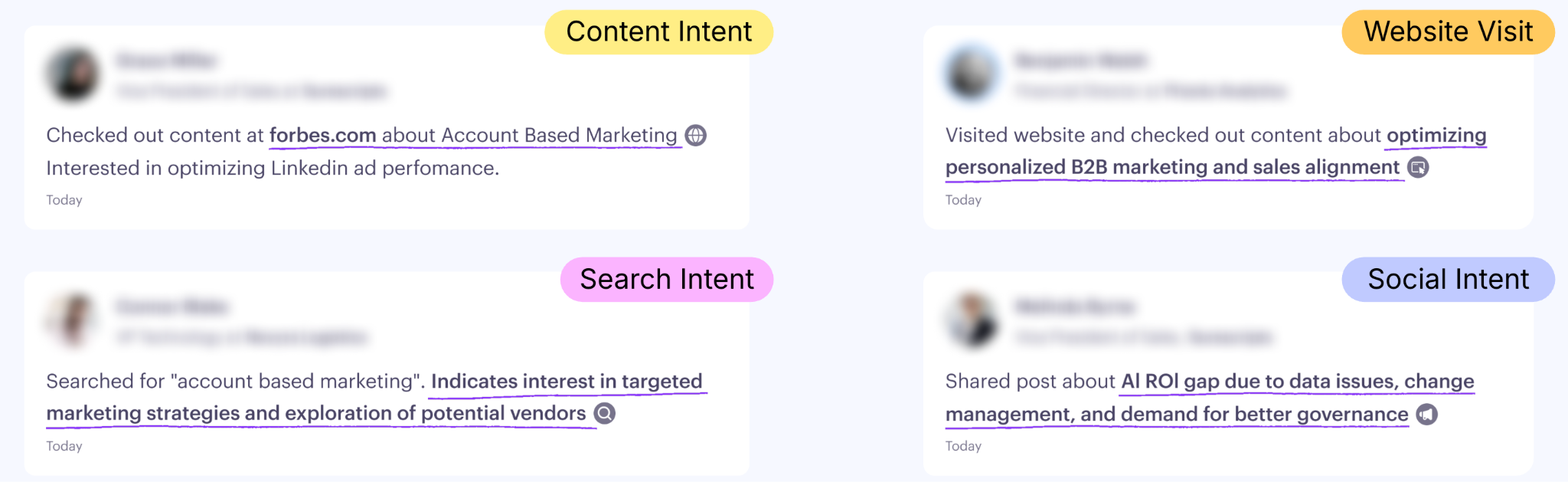
This also includes signals from zero-click searches, for example, when a buyer reads an AI-generated summary in search results and never clicks through to a website. Other intent tools miss that entirely. Influ2 catches it.
Advertising
What 6sense does:
You can run programmatic and LinkedIn ads natively within 6sense, and sync custom audiences to other social channels like Meta and Google. To measure ad performance, 6sense reports engagement at the account level, then hands you a list of contacts it may have come from — based on inference, not confirmed engagement.
What Influ2 does:
Influ2 automatically delivers ads across multiple platforms (including LinkedIn, Facebook, Instagram, Google, Bing, and Amazon) and offers a complete view of ad performance in one place—down to the contact-level without cookies, IP-targeting, or persona-based assumptions.
Influ2 only targets the exact contacts your sales team cares about and delivers ads to them across display, search and social, launched from a single place. You know who saw the ads and who clicked, by name.
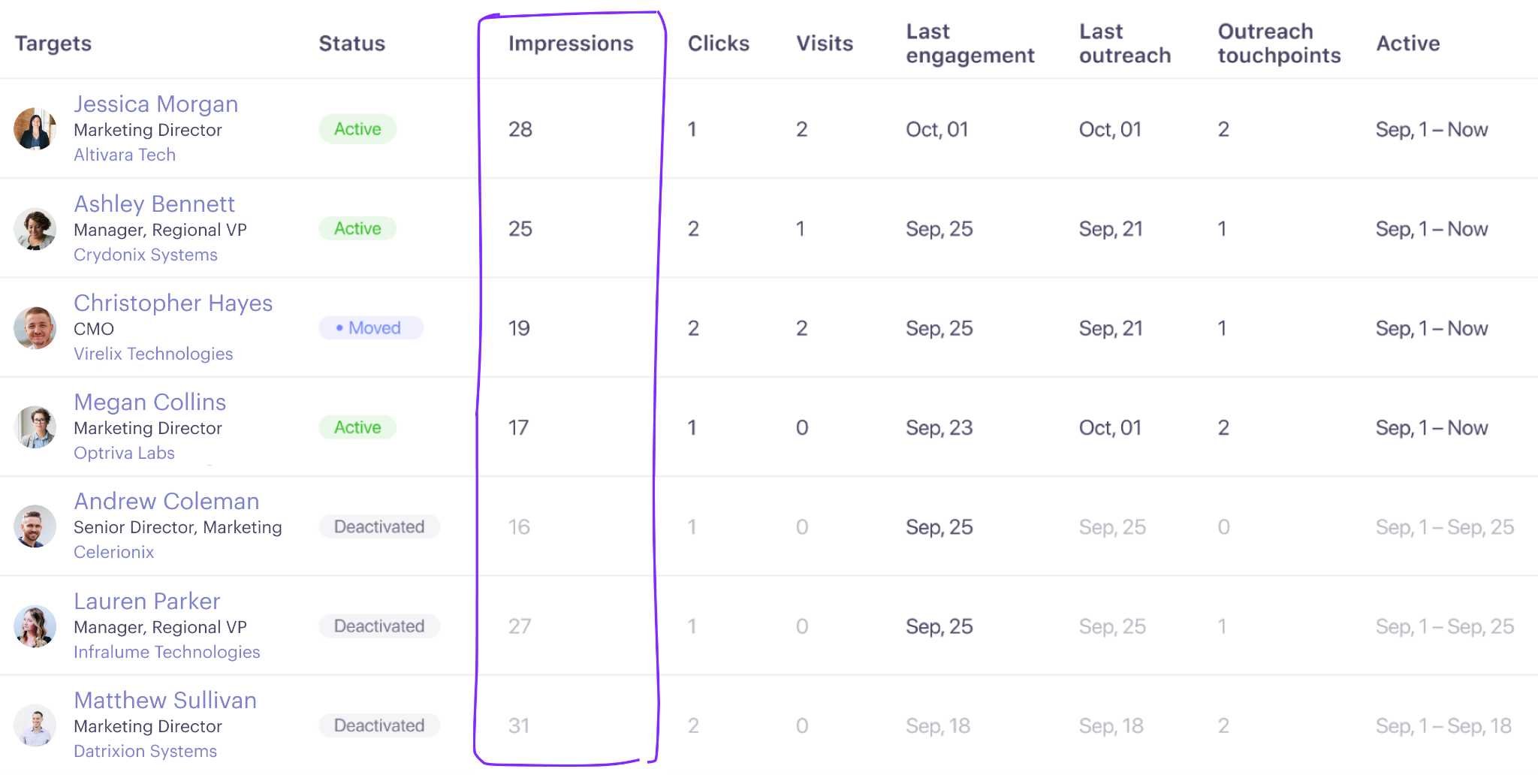
Keep in mind: 6sense measures match rate by how many accounts were reached with ads; that’s anyone within that account.
Influ2 measures match rate on the percentage of your target contacts who actually saw your ads. Those are very different definitions, and worth asking about when comparing the two.
Buyer journey orchestration
Influ2 and 6sense both offer buyer journey orchestration from within their platforms, but they work very differently.
What 6sense does:
6sense’s orchestration (Intelligent Workflows) supports multi-path, conditional campaigns, and it can trigger on behaviors like email opens or MAP-tracked events. Workflows are built with account-level engagement thresholds that drive the account through journey milestones.
The actionable audience is built from inbound engagement (handraisers). So if a buyer is anonymously researching your category (searching for terms, reading third-party content, visiting your site without converting), but never fills out a form, that activity only reaches 6sense at the account level. You'll know the company is active; you just won't know which person is specifically interested until they've identified themselves.
What Influ2 does:
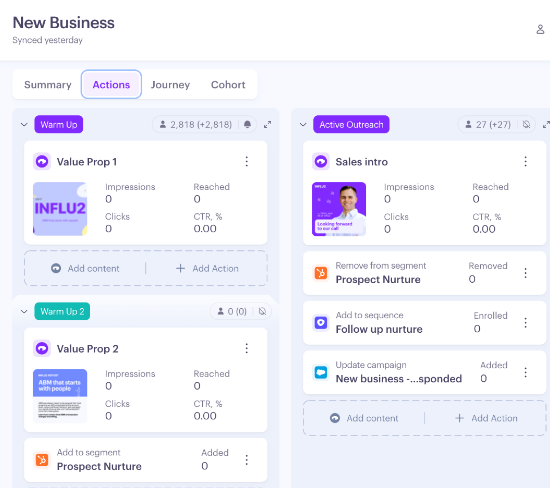
Influ2 orchestrates buyer journeys at the contact level, across every step. When a buyer takes a specific action (searches for a topic, clicks an ad, downloads a guide), Influ2 can automatically trigger the next relevant touchpoint: show that person an ad about the topic they just searched for, send a marketing email from HubSpot, alert their sales rep, or automatically enroll the contact in Outreach or Salesloft.
Influ2's orchestration happens automatically, with or without a click, so the next action can fire earlier in the research process. This way, you can catch their attention when the buying window is open.
Revenue attribution
What 6sense does:
6sense shows you account-level revenue analytics. But because ad engagement is tracked at the account level, influence reporting involves a level of assumption that your ads reached the right people to influence the deal
What Influ2 does:
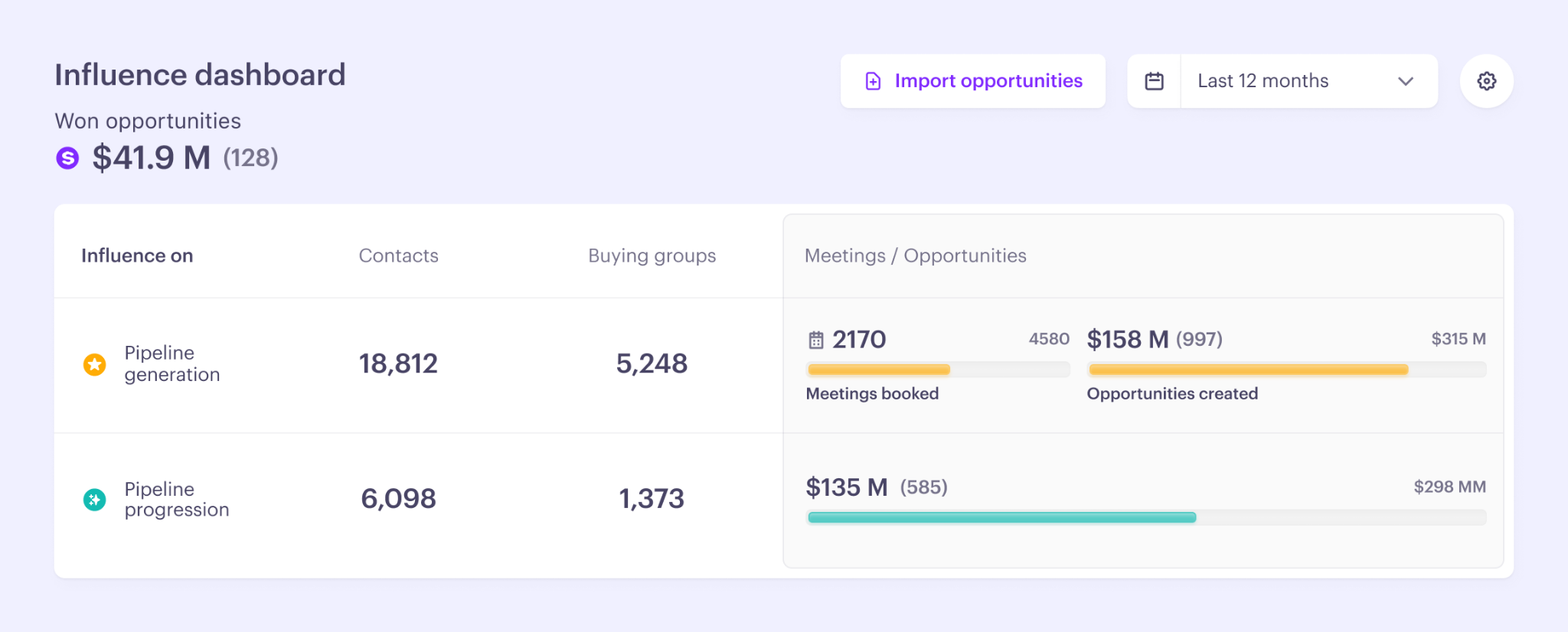
Influ2 shows you the direct influence your ads have at every pipeline stage, following each buying group member from the first engagement all the way through to closed deals, retention, and expansion.
You can see which buying group members engaged with your programs, what they engaged with, and how their individual journey contributed to revenue. No assumptions, just measured impact reporting
Key differences at a glance
Function | Influ2 | 6sense |
Buyer intent | Contact-level insights include who is showing interest, when, and what topics they care about—across social, search, website visits, and 3rd party content. | Account-level insights from 3rd party content consumption, and website deanonymization. |
Advertising | Ads only target the exact contacts sales cares about, and you see exactly who you reach—even if they never click. Ads are automatically distributed across LinkedIn, Facebook, Instagram, Google, Bing, and Amazon. | Programmatic and LinkedIn ads are run natively within 6sense, and audiences can be synced to launch separately within other channels like Meta and Google. 6sense reports ad engagement at the account level. |
Buyer journey orchestration | Journeys adjust automatically across GTM channels as individual buyers act. | Intelligent Workflows guide accounts based on their collective engagement across all GTM channels. |
Revenue Influence | Performance is based on precisely who you’re reaching and how they convert to revenue. | Robust reporting and analytics to measure account-level influence on deals. |
Best-suited for | Reaching and influencing specific buying group members. | Identifying and prioritizing accounts at scale |
How to use both
Used together, 6sense and Influ2 close the gap between identifying accounts that show interest, and reaching the actual people inside them.
When combined, 6sense and Influ2 give you:
Broad account intelligence from 6sense to identify accounts that show intent
Precise contact targeting from Influ2 to engage the right people within those accounts
Real-time engagement signals that tell sales exactly who to call and why
Step 1: Use 6sense to find accounts that show intent
Let 6sense's predictive engine identify accounts within your ICP that are showing buying intent. This is account-level prioritization at scale — where 6sense is strongest.
Step 2: Use Influ2 to reach the right people inside those accounts
Take the accounts 6sense surfaces and build contact-level programs in Influ2. Influ2 will show you who among those contacts is actively showing intent, let you deliver ads directly to them, and orchestrate follow-up automatically as they engage.
Step 3: Align Sales around contact-level signals
When a buying group member engages with your ads or shows intent your sales rep gets an alert from Influ2 with the person's name, company, what action they took, and the topic they’re interested in. That's all the context they need to follow up with a relevant message.
Real-world example
6sense shows that ACME Corp is in-market.
Using Influ2:
You identify key decision-makers: VP of IT, Director of Operations, and the Procurement Manager
You add them to Programs with content relevant to each role's pain points
You see the Director of Operations click on a case study
Influ2 alerts your sales rep in real time on Slack or Teams
The rep follows up with the Director of Operations with a relevant message based on that engagement
This is how you turn account-level intent into contact-level action.
Summary
You don't have to pick between Influ2 and 6sense. Together, they close the gap between identifying accounts that show intent and precisely reaching the actual people within. Influ2 fills the engagement layer that account-level platforms can sometimes miss.