Building a Pipeline Generation Journey
Last updated: October 12, 2026
The goal of your pipeline generation journey is to take a cold prospect from unfamiliar with your brand to actively working with Sales. Start by targeting the same contacts your sales team cares about—people at priority accounts with no open opportunity. Build familiarity by reaching those people across channels, then use contact-level intent and engagement signals to show Sales exactly who to reach out to, and how to make their message relevant to capture their interest. As prospects engage, adapt your messaging and continue supporting Sales with relevant ads, so Marketing and Sales work together to turn interest into pipeline.
Variation 1: Omnichannel
An omnichannel journey helps you coordinate ads, emails, sales outreach, and Salesforce reporting so buyers get relevant follow-ups based on their interests and actions. Instead of managing each channel separately and relying on manual steps, you can automate the right actions at the right time—all within one cohesive journey. Reaching prospects across multiple channels also increases the chances of your message being seen, reinforces it through repeated exposure, and keeps your brand top of mind as buyers move through their journey.
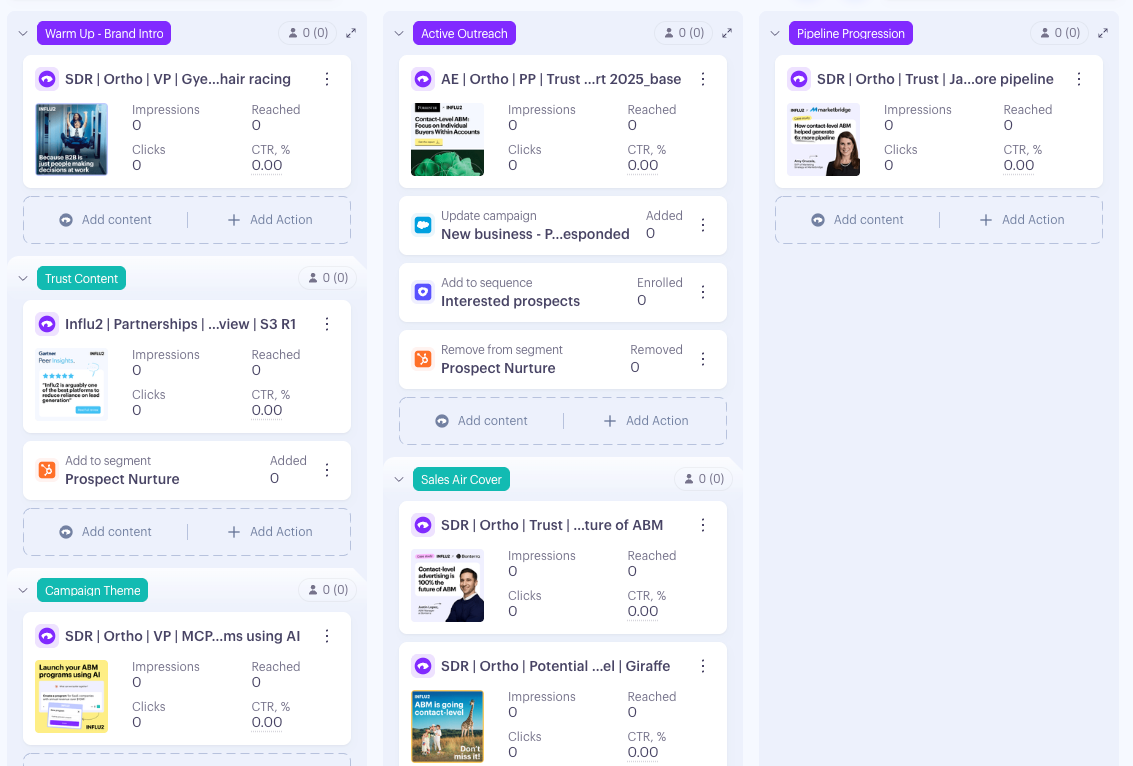
Let’s break it down….
Warm up stage
Step | How to build it |
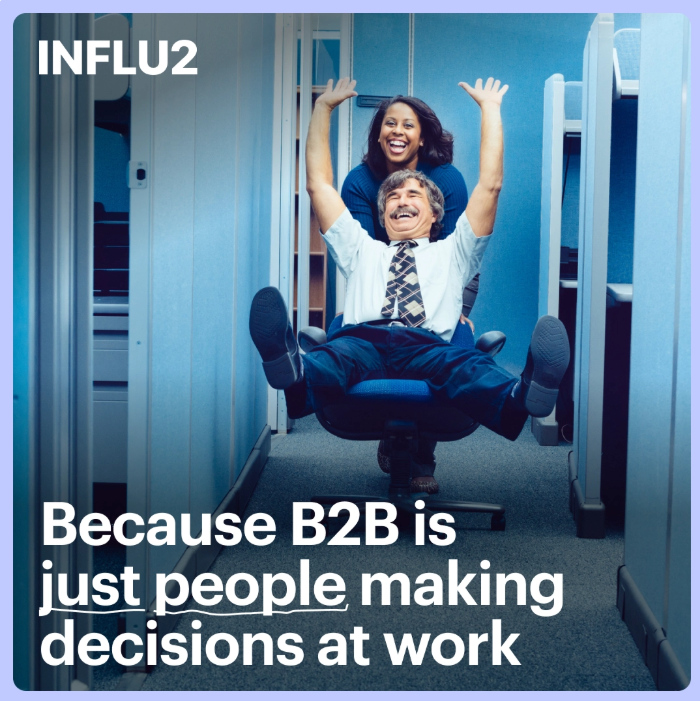
Step 1: Brand Intro 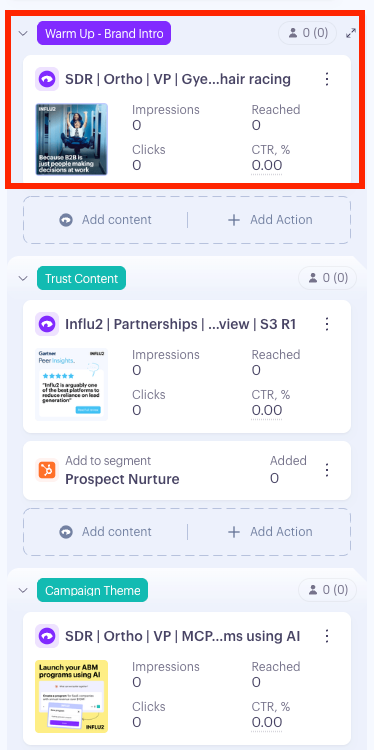 | Actions
Journey criteria
|
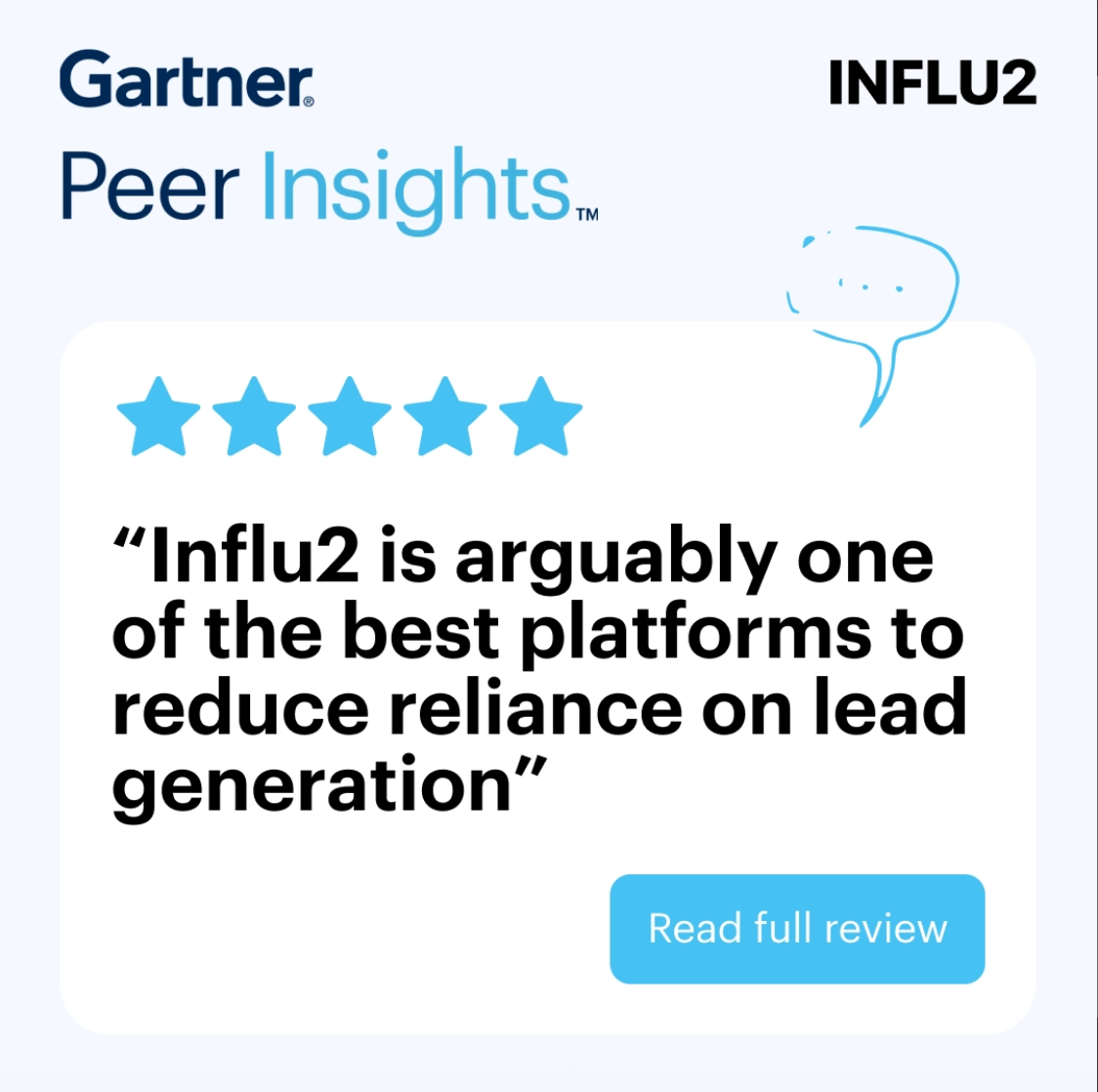
Step 2: Trust Content 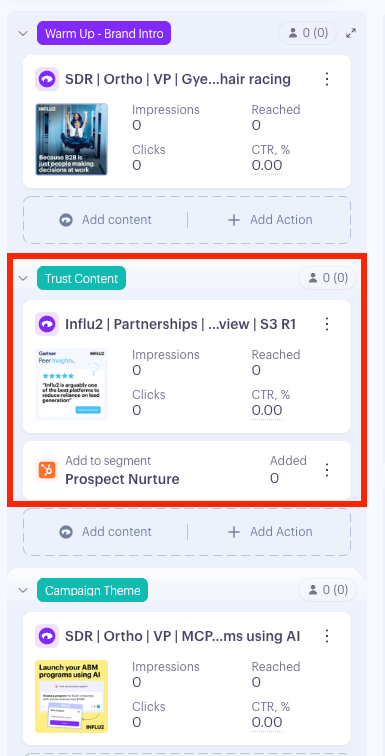 | Actions
Journey criteria to move here
|
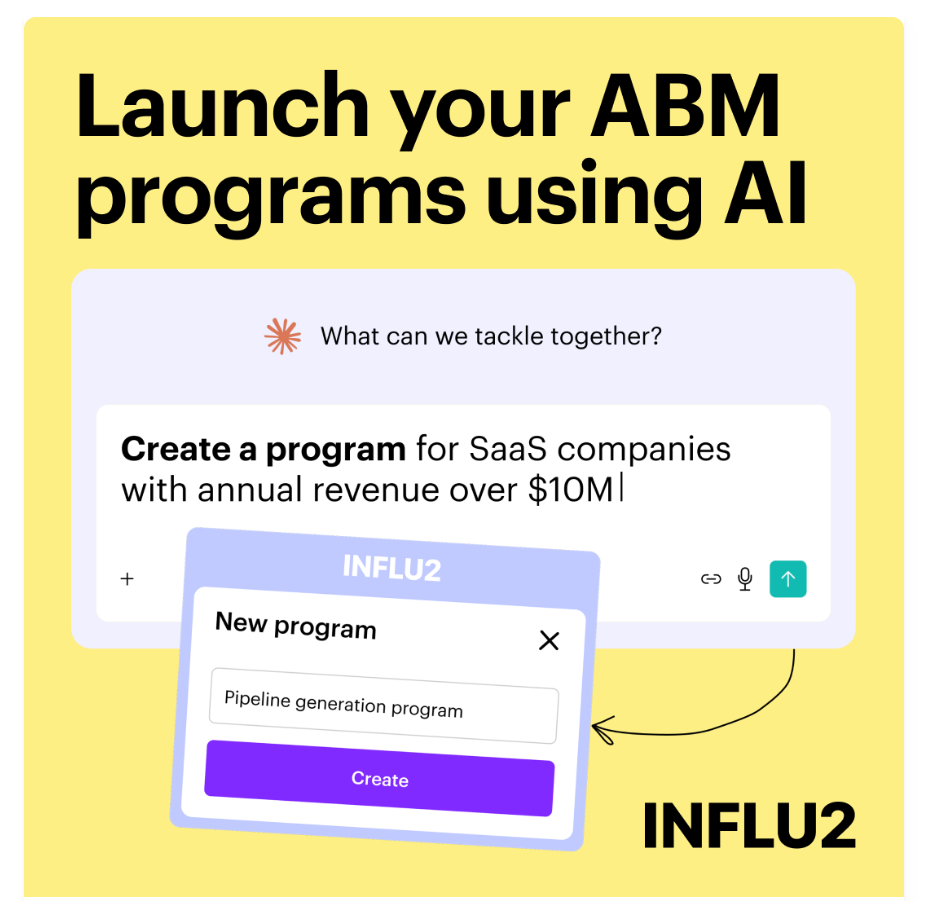
Step 3: Campaign Theme 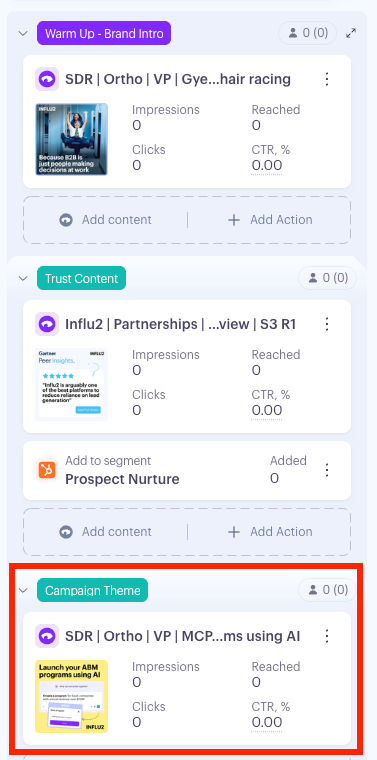 | Actions
Journey criteria to move here
|
When does Sales take action?
Prospects will continue to loop through this warm up stage until Sales begins outreach.
Once an intent signal, HubSpot marketing activity, or ad click is detected, Sales will be notified through the channels configured in your Follower Settings. This is the moment for them to reach out with a relevant message to capture interest while it’s still top of mind.
Sales team still getting started with Influ2 signals? Check out the Signal-Selling Playbook to learn how to use Influ2 signals to boost pipeline by 2.18x.
Another option to consider: Rather than looping a prospect until Sales follows up on an engagement or intent signal, you can add a “Prioritize for Sales” step at the end of the warm-up stage. This proactively prompts sales to reach out after a defined number of impressions, signaling the prospect has been sufficiently warmed up for outreach.
Actions 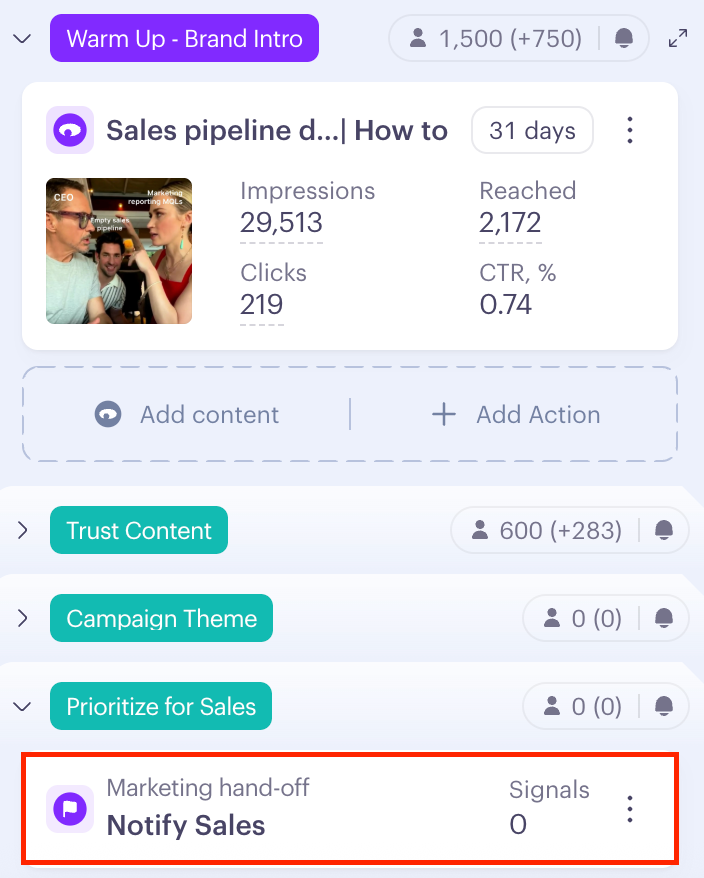 | Journey criteria to move here 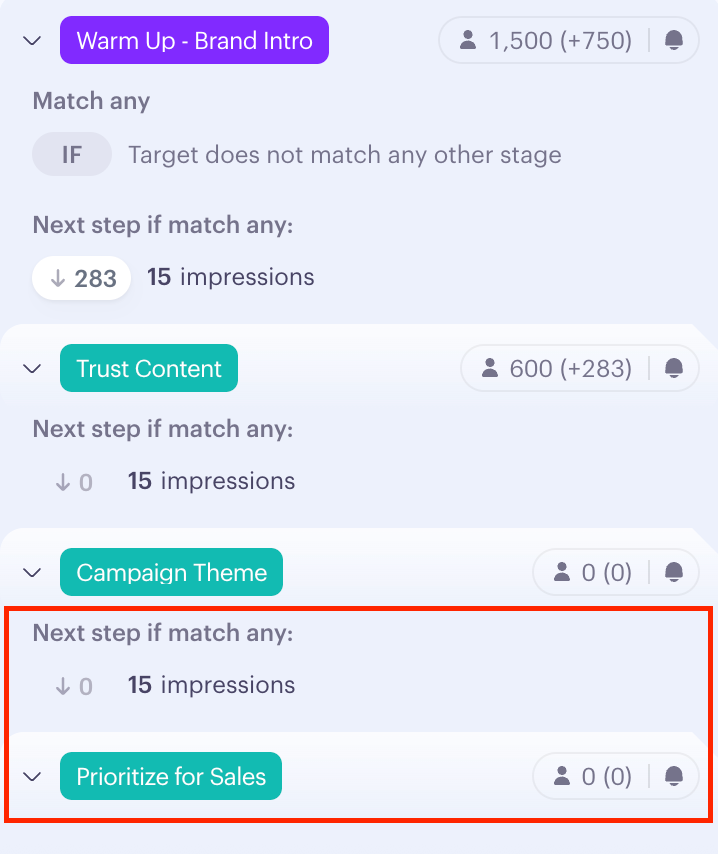 |
Sales outreach is the exact trigger that moves prospects into the next stage. Let’s take a look.
Active outreach stage
Step | How to build it |
Step 1: Active Outreach 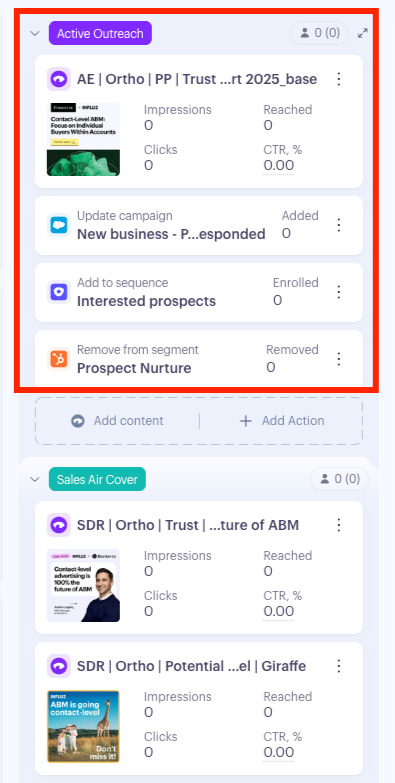 | Actions This stage provides marketing air cover while sales actively prospects a target. The goal is to reinforce the same messaging Sales is using across channels to keep your brand and value proposition top of mind.
Journey criteria to move here
|
Step 2: Sales Air Cover 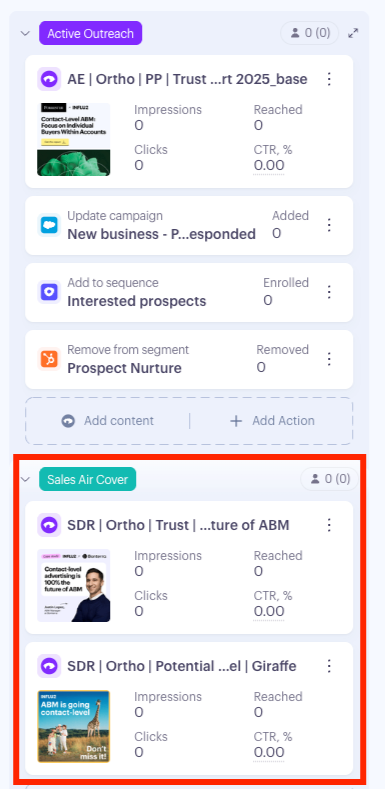 | Actions
Journey criteria to move here
|

Sales Action
Sales outreach is what moves a prospect into this stage. Reps should use the Signals Center and Target Report to identify who to reach across the full buying group and understand each person’s interests so they can tailor their messaging.
Marketing continues to provide air cover throughout this stage, keeping your brand top of mind during the quiet periods between sales conversations.
Pipeline progression stage
Step | How to build it |
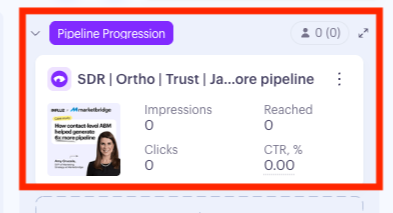 | Actions Once there's a real opportunity open, the messaging changes. This can be handled as the third stage in this journey, our built out as a dedicated progression program.
Journey criteria to move here
|
What happens at the end of this journey?
Consider adding an optional dormant stage that stops all ads once an opportunity closes.
Journey criteria to move here: Opportunity stage has changed to Closed Won or Closed Lost.
Variation 2: Intent-based topic branching
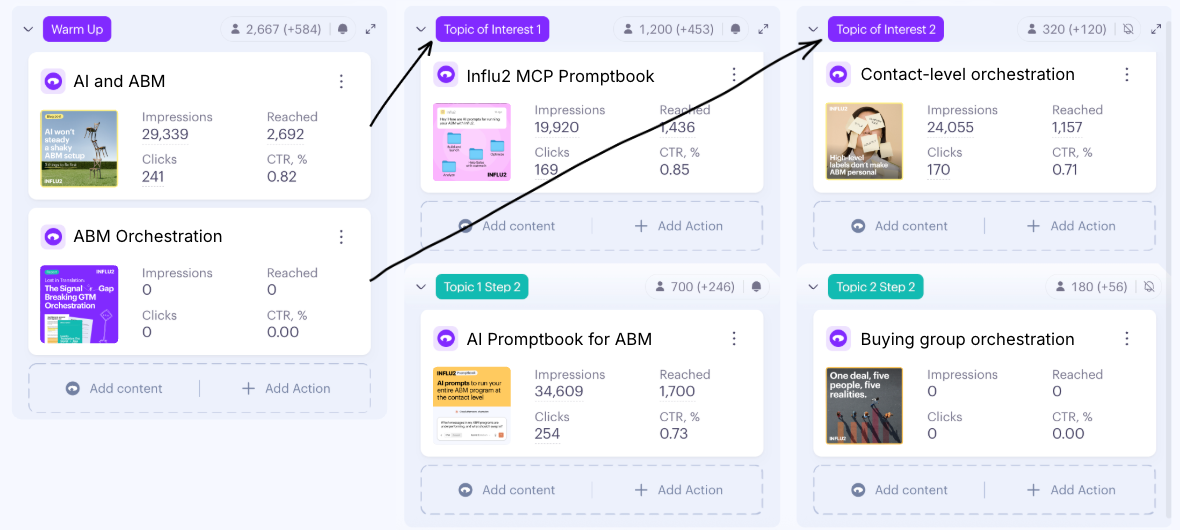
Topic branching lets you automatically adjust a buyer’s journey based on the topics they engage with across channels. When a prospect shows interest in a specific topic, you can route them into a dedicated path with relevant ads, emails, and sales follow-up. This helps you reach buyers with messaging that matches their interests while interest is still high, increasing the chances of grabbing their attention and prompting them to take the next step.
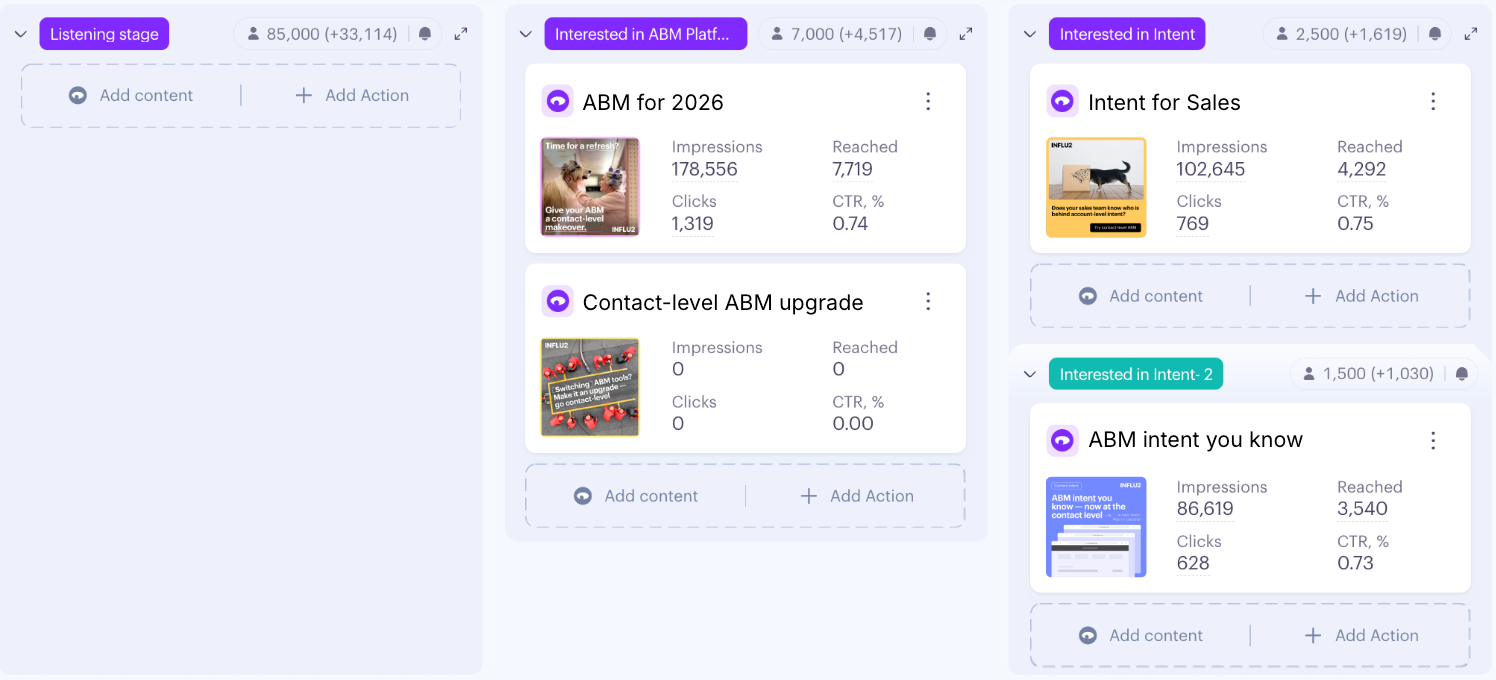
To set this up, create a separate stage for each topic instead of using one Active Outreach stage triggered by detected outreach. Give each stage its own trigger based on a buyer’s interest in that topic, indicated by an Audienscope intent signal or direct ad click. For example, buyers who engage with security content enter a stage with dedicated security messaging, while those who engage with reporting content enter a reporting stage. Each buyer automatically receives follow-up content tailored to the topic they engaged with.
Keep in mind: This approach uses the interest signal—not detected outreach—as the entry criteria. It assumes Sales is already reaching out to these buyers, rather than relying on direct outreach tracking.
Journey criteria to move here: Target interested in [TOPIC] in the last [X] days.
Variation 3: Listening-only first stage
For really large cohorts (ex. 20,000+ contacts), you could consider starting stage 1 with listening on, but no ad creatives. People sit there until an intent signal is detected, then move into a stage where advertising starts. You're spending impressions only on people who have already shown they're thinking about the problem.
Be honest about the trade-off: Waiting for intent means possibly missing people who would convert after seeing your ads. Contact-level ads don’t just capture intent—they create it. Use intent to prioritize a large audience, not as a replacement for warming people up.